Design System (coming soon)
Senior Product Designer
Q3 2022 - Q3 2024
Product Strategy, Research, UI/UX design, Interaction design, User Testing, Cross-functional alignment,
Role
Team
(coming soon)
Challenge: At MyVest, as we expanded the engineering team and introduced increasingly complex features, several challenges arose:
Bug reports grew as new features were added.
Guidelines were scattered across repositories, difficult to find, and often inconsistent or outdated.
Enhancement requests took too long to implement, affecting usability.
Production efficiency lagged, technical debt built up, and user experience declined as user flows expanded.
Task: I was asked to revolutionize the design and development process by creating a scalable design system that would:
Establish a reusable component library for a multi-tenant wealth management platform.
Define foundations for styles, UX interactions, and consistent user experiences.
Standardize collaboration and feedback across cross-functional teams.
Create a central repository of UI components, their variants, and documentation for developers.
Provide UX documentation, personas, workflows, and decision flows.
Deliver page templates and design patterns to reduce waste and effort.
Expand components to meet requirements, exceed constraints, and enhance usability with animations.
Actions: To achieve this, I:
Conducted a UI Inventory and Audit
What: Performed a comprehensive review of hundreds of legacy code instances, deconstructed outdated user flows, and compared them against best-in-class e-commerce and finance design systems.
Why: To identify redundancies, reveal inconsistencies, and establish a clear set of foundational and custom components (e.g., buttons versus data tables/charts) tailored to MyVest’s unique workflows.Defined Design Tokens
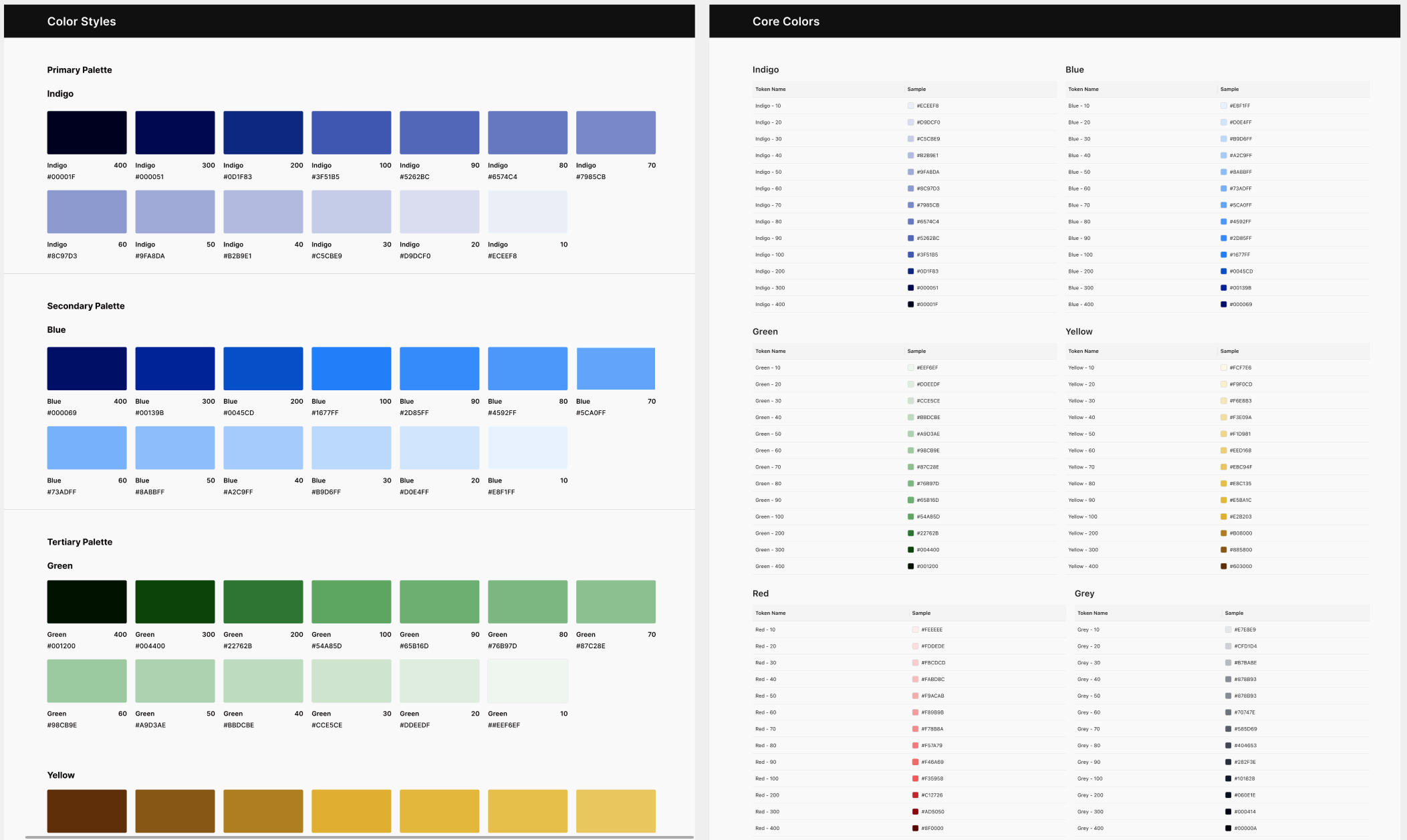
What: Created a set of design tokens (colors, typography, spacing, states) emphasising accessibility, information density, and functional clarity, implemented in Storybook.
Why: To unify the visual language across the platform, ensure scalability, and provide developers with a single source of truth.Partnered in Component Development
What: Collaborated directly with front-end developers in Angular, CSS, and Figma to co-create UI components through rapid iterations, rather than relying solely on handovers.
Why: To surface usability issues early, reduce duplication of effort, and significantly cut development cycles by aligning design and engineering in real time.Published a Living Style Guide
What: Developed an internal style guide with examples, usage guidelines, and best practices, continuously updated and circulated for feedback.
Why: To ensure consistent application of the design system across teams, reduce ambiguity, and foster a feedback loop that evolves with product needs.
For Product:
Achieved consistency across products, enhancing user experience and reducing user confusion.
Increased user adoption and task completion by 35% by reducing learning curves and creating intuitive navigation.
For Engineering:
Lowered technical debt by standardising visual language and workflows.
Boosted development productivity by 27% through reusable components and patterns.
Enhanced cross-team collaboration with a shared design language.
For the Business:
Cut product-related bug reports by 50%, speeding up product cycles.
Improved development efficiency and quicker iteration speeds.
Reinforced brand identity through consistent, polished experiences across the platform.